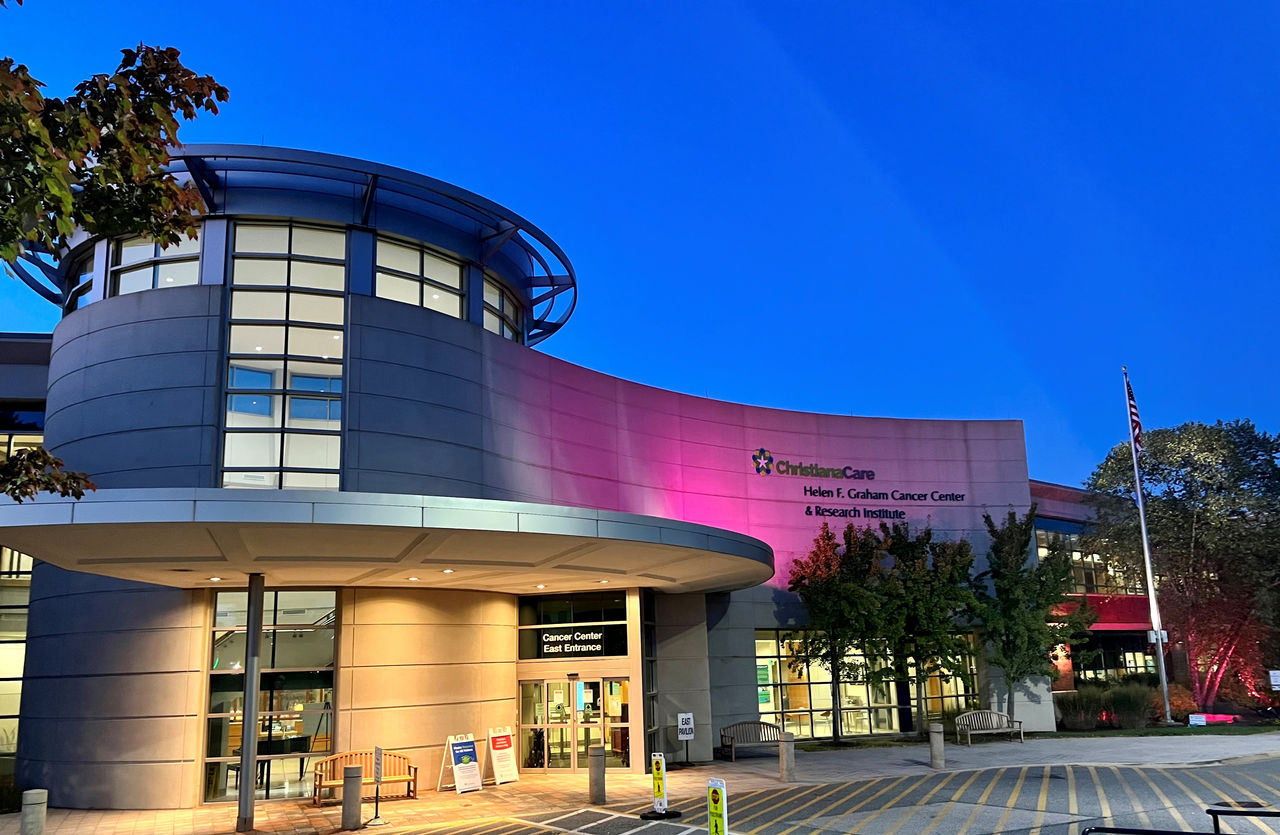
Wilmington, Del. — July 4th, 2026 — Lisen Imprinting Diagnostics (LisenID), a precision diagnostics company pioneering the clinical application of Loss of Imprinting (LOI) as an early molecular biomarker for cancer, announced on June 15th 2026 a research collaboration with ChristianaCare’s Cawley Center for Translational Cancer Research to evaluate its proprietary QCIGISH (Quantitative Chromogenic Imprinted Gene In-Situ Hybridization) diagnostic platform in lung cancer patients.
The study, led by ChristianaCare’s Cawley Center for Translational Cancer Research, will evaluate whether LisenID’s technology can detect early molecular changes associated with cancer in biopsy tissue before those changes become visible through conventional pathology. The collaboration aims to assess how the technology may support physicians when biopsy results are inconclusive or tissue samples are limited.
“Lung cancer remains one of the most challenging cancers to diagnose with certainty in its earliest stages,” said Hannah Zhou, Chief Executive Officer of LisenID. “Collaborating with ChristianaCare provides an important opportunity to evaluate our technology in a real-world clinical setting alongside leading physicians and researchers. Together, we hope to generate evidence that will help improve diagnostic confidence and ultimately benefit patients.”
As lung cancer screening programs continue to identify smaller and earlier-stage lesions, physicians are increasingly faced with cases where biopsy results do not provide definitive answers. Approximately 20% of lung biopsies are inconclusive, often requiring repeat procedures or prolonged clinical surveillance before a diagnosis can be confirmed.
LisenID’s QCIGISH platform is designed to identify Loss of Imprinting (LOI), one of the earliest molecular events associated with carcinogenesis, providing clinicians with additional biological information that complements traditional pathology.
The collaboration brings together multidisciplinary expertise from ChristianaCare, including thoracic surgery, interventional pulmonology, translational cancer research, and molecular diagnostics.
“Advances in cancer care depend on evaluating new approaches that may improve diagnosis,” said Thomas Schwaab, M.D., Ph.D., Bank of America Endowed Medical Director of ChristianaCare’s Helen F. Graham Cancer Center & Research Institute. “This collaboration brings together clinicians and researchers to study a technology that could help reduce uncertainty for patients and support better decisions in challenging cases.”
The clinical effort is led by Brian Nam, M.D., Chief of Thoracic Surgery and Interventional Pulmonary at ChristianaCare.
“One of the most difficult situations for patients is when a biopsy does not give a clear answer,” said Dr. Nam. “We may not have enough tissue or the results may be unclear. We are evaluating whether this technology can provide additional information that helps guide next steps and reduce uncertainty.”
The study will be conducted through ChristianaCare’s Cawley Center for Translational Cancer Research, whose mission is to evaluate promising technologies that have the potential to improve patient care.
“Our role is to rigorously evaluate new approaches in a clinical setting,” said Jennifer Sims-Mourtada, Ph.D., Associate Director of the Cawley Center for Translational Cancer Research. “This technology has shown promise in published research and through collaborations with leading institutions. We are now working to determine whether it can provide meaningful information that supports better clinical decisions.”
The collaboration builds upon LisenID’s growing body of clinical research and strategic partnerships with leading healthcare institutions focused on advancing precision cancer diagnostics. The company’s technology has been developed through research involving more than 10,000 clinical cases and is supported by publications in peer-reviewed scientific journals, including the Journal of Clinical Oncology and Clinical Epigenetics.
“Our goal has always been to develop molecular diagnostics that provide physicians with clearer answers when conventional testing falls short,” said Tina Cheng, M.D., Co-Founder & CTO of LisenID. “Some of the earliest changes in cancer occur at a molecular level before they can be seen under a microscope. Our goal is to validate the applicability of our test in clinical cases to see how the test can help physicians when standard testing does not provide clear answers.”
As the study progresses, LisenID and ChristianaCare will work together to evaluate the technology’s clinical utility in supporting earlier and more confident lung cancer diagnosis.
About Lisen Imprinting Diagnostics
Lisen Imprinting Diagnostics (LisenID) is a precision diagnostics company developing the first clinical platform to measure Loss of Imprinting (LOI)—one of the earliest molecular events associated with cancer development. The company’s proprietary QCIGISH technology is designed to provide definitive molecular information that complements traditional pathology, helping physicians resolve indeterminate biopsy results and improve cancer diagnosis. LisenID is advancing diagnostic applications across multiple cancer types through collaborations with leading healthcare institutions.
More about the collaboration can be found on ChristianaCare’s website here.