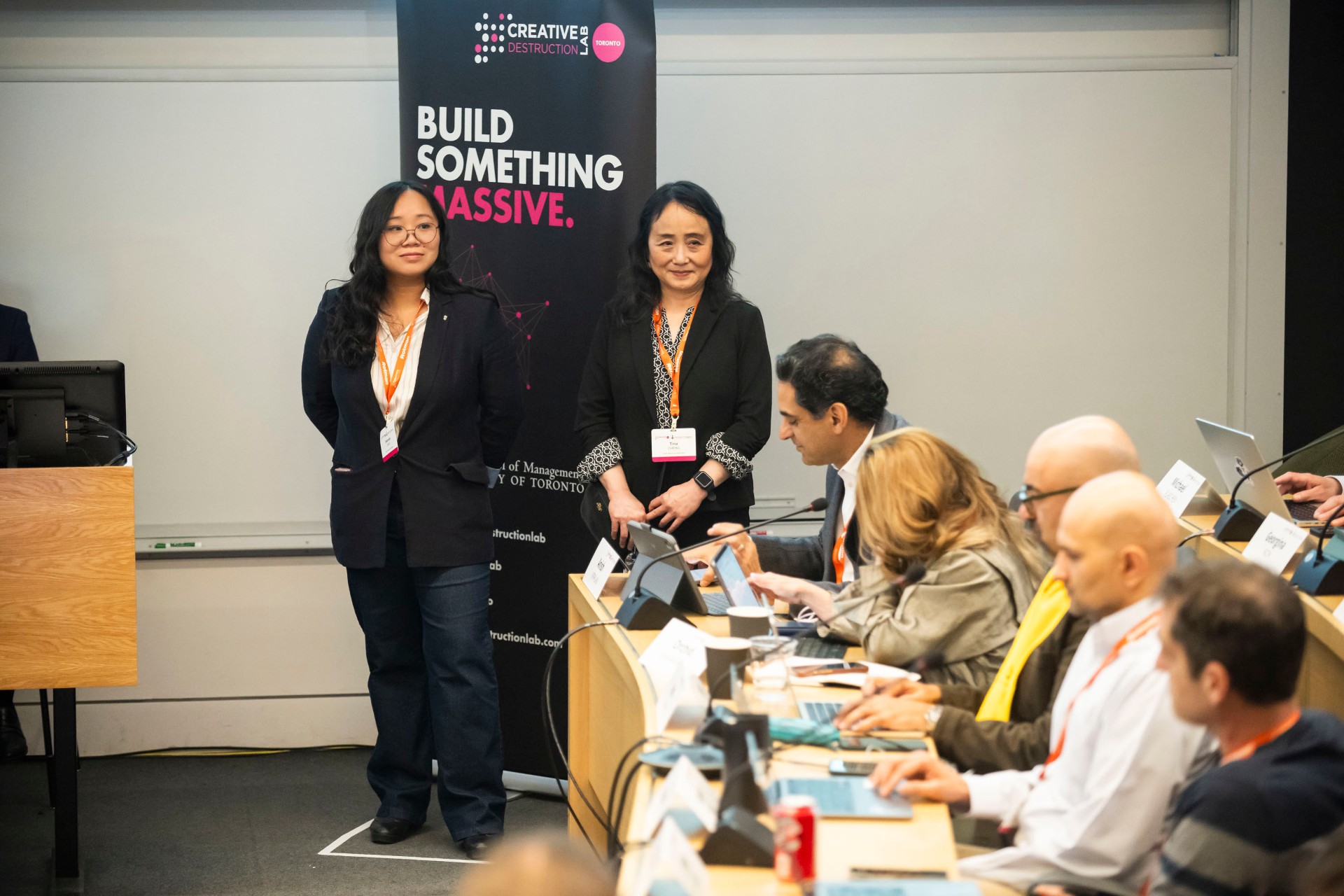
Wilmington, DE and Toronto, ON – July 2026 — Lisen Imprinting Diagnostics (LisenID), a cancer diagnostics startup pioneering the use of Loss of Imprinting (LOI) as an early biomarker for cancer, announced its graduation from the 2025/2026 Cancer Stream of the Creative Destruction Lab (CDL) in May 2026, a highly selective, objectives-based program for science-driven companies. LisenID is one of only two graduates headquartered in Delaware that have graduated the CDL program in it’s history.
Selected from a highly competitive global applicant pool, LisenID is among a small group of ventures to successfully complete the rigorous multi-month program, which is designed to accelerate the growth of massively scalable, science-based companies through mentorship from world-class entrepreneurs, investors, and scientists.
During the program, LisenID made key progress across product, clinical strategy, and commercialization—clarifying the intended use for its lung and breast tests, advancing collaborations with the Mayo Clinic and ChristianaCare, and strengthening its reimbursement approach.
“There is no question we are a fundamentally stronger company than when we entered CDL,” said Hannah Zhou, CEO of LisenID. “Through the CDL network, we gained direct access to some of the most experienced operators and scientific leaders in the world. Their guidance helped us sharpen our clinical strategy, validate our market approach, and accelerate our path to commercialization.”
The Creative Destruction Lab program is known for its intensive, milestone-driven structure, where companies must demonstrate measurable progress to remain in the program. Founded at the University of Toronto’s Rotman School of Management, CDL has supported companies that have collectively generated billions in equity value and includes alumni such as leading AI and biotech innovators.
LisenID is developing the first diagnostic platform to clinically measure Loss of Imprinting (LOI), one of the earliest indicators of carcinogenesis, to resolve indeterminate tumor biopsy results and enable definitive cancer diagnoses within one week. As cancer screening technologies advance and detect increasingly early-stage lesions, up to 1 in 5 biopsies remain inconclusive—creating delays, unnecessary procedures, and increased patient risk. LisenID’s platform aims to eliminate this diagnostic gap.
“CDL pushed us to focus relentlessly on value creation and de-risking the opportunity,” added Zhou. “We are now positioned to move faster—advancing clinical validation, expanding our partnerships, and preparing for first commercial deployment.”
Following graduation, LisenID will focus on completing prospective clinical validation studies in collaboration with local partners such as ChristianaCare’s Helen Graham Cancer Center, scaling its laboratory and operational infrastructure, and advancing toward commercialization of its first diagnostic tests in lung and breast cancer.